American boys loved guns in the 1950s. Always have. Our movie heroes slaughtered the country’s enemies on the silver screen and tough cops performed gun ballets on prime time TV. There was never any blood. Guns were good for the country and America was good to guns.
Plastic weapons lay gift-wrapped under the Christmas tree. Armed with air rifles my older brother, our friends and I re-enacted World War II battles on the bluffs overlooking Portland harbor. We build snow forts. Imaginary bullets tore holes through make-believe Nazis. Hitler was the last enemy to die. No one played him. None of us suffered a scratch during these battles. There was no blood.
“I wonder what it would be like to be hit by a real bullet,” I said after our replay of D-Day.
“There’s only one way to find out.” My older brother stuck his air rifle's muzzle of his air into the soggy grass. He cocked the lever twice and pulled the trigger.
A wad of dirt hit my chest. It stung a little. No blood.
“Now it’s my turn.” I rammed my air rifle into the ground.
“I wasn’t wondering nothing.” Frunk backed away at a run.
My shot miss him.
We broke into warring camps. Shooting the dirt was too slow and my side dropped our rifles in favor of throwing mud clods. My brother’s friends picked up rocks.
A stone hit my head and I keeled over out cold. Our enemies routed us and I woke to my brother and his allies standing over me. Blood leaking from my skull.
“You give, you dirty Nazi?” Frunk was offering quarter.
“I surrender.” Defeat tasted of mud and blood, but I wasn’t giving him the pleasure of seeing my tears and planned my revenge.
The next time I would end up on top.
At the age of seven time was on my side.
In July of 1960 my father packed our Ford station wagon for a week’s vacation on Watchic Pond. We stopped at my grandmother’s house in Westbrook for lunch. My two brothers and two sisters ate their Italian sandwiches, as my parents argued with Edith about the Space Race with the Soviet Union. My mother and father feared the communist domination of Space, while my grandmother defended the international pursuit of peace. Edith had served as a nurse in France during World War I. My father had waged World War II with the Army Air Force. Testing radar-controlled 20mm cannons in B-25s. Casualty rates at that Ohio airfield were over 20%. All dead. The debate was about war. Atomic War.
None of them heard my request to go to the bathroom or noticed my leaving the kitchen table.
After doing my business I climbed up the stairs to the bedroom over the garage and pushed through a rack of military uniforms in the closet. A repeating rifle rested on wall pegs. Two shotguns hung below its berth. I freed the Winchester and held the rifle in my two hands.
The trigger was cold steel and I levered open the chamber. I had seen my father once do the same, although I had never seen him fire a rifle or shotgun and there were no guns in our house. I had looked high and low without finding as much as a derringer.
There were no bullets to be seen.
I kneeled by the window and aimed the rifle at the cars on Main Street. The passing Cadillacs offered a big target and I imagined Adolf Hitler behind the wheel of one. My aim sighted a driver. He had a mustache. Before I could pull the trigger, my father ripped the weapon from my hands.
“What the hell are you doing?” His rage boiled beyond his skin.
“It isn’t loaded.” I backed away to the wall and put my hands behind my back.
“You never know.” My father levered open the chamber.
“I checked before.”
“By levering open the chamber?” His anger simmered below the boiling point, as if he understood my fascination.
"Yes, sir, same as you."
"Why are you aiming at a car?
I was pretending to kill Hitler."
"Pretend? Killing a man is not pretend. Your Uncle Jack was in Korea. He did things there. He never talks about them. Do you understand?"
“Yes, sir.”
My uncle had been a marine lieutenant and sadid noting about killing or the dead. Marines or commies.
“Stay away from guns.”
He replaced the Winchester and locked the closet.
That evening at the lake my mother and father argued about guns. In her mind guns were as American as John Wayne. My older brother and I went outside to watch the stars.
“Plastic guns are only toys.”
“The Winchester is not a toy. My childhood friend thought a shotgun was a toy and he shot his baby brother dead. They aren’t toys.”
My father was adamant on this issue and confiscate our toy guns back on Falmouth Foresides.
We borrowed broken plastic guns from my next-door neighbor to continue our participation in the games of WAR. Chaney my best friend gave me a Mattel pistol. He was my best friend. Fighting Nazis in the woods wasn’t the same without your own weapon. No one suggested a repeat of the mud fight. We were not cavemen.
Mid-summer my father was promoted to a better job with the phone company. Our family moved from Maine to the South Shore of Boston. Our new house was painted pink. A month later my mother informed me that Chaney had drowned in Sebago Lake. She didn't explain how. He was my first dead person.
In August my parents sent my older brother and me away to a Boy Scout camp on Lake Winnipesaukee. We had two weeks to earn the five merit badges necessary to attain the rank of a Wolf Scout. Swimming, canoeing, basketry, and forestry required several days and on the second-to-last day the camp counselor led our troop to a shooting range.
We were armed with .22s and positioned on the firing line. The rifle was lighter than the Winchester in my grandmother’s closet.
Hitting the target five out of ten times fulfilled the requirement for the rifle merit badge.
I accomplished this task on the seventh shot with three bullets to spare. The woods behind the bunker went on for miles. I loaded one into the .22 and aimed at a treetop beyond the sand bunker. I imagined Hitler in a tree. The bullet nicked a distant branch.
“Nice shot,” Frunk whispered with a smile.
I didn’t have time to enjoy his accolade.
“What you think you’re doing?” My counselor yanked the rifle out of my hands.
“Nothing.” .
“You shot that last one in the air.” His face was swollen with outrage. He had lectured us two hours on gun safety.
“No, I didn’t, it slipped from my hand.” I wasn’t admitting anything.
The rest of the scouts stopped shooting. Another counselor acted as back-up. A young boy with a gun in his hand was a danger to himself and others.
“You have any idea how far a bullet travels?”
“No, sir.”
“Maybe a mile.” The counselor wagged his finger in my face. “You could have killed someone and maybe you did.”
“Sorry.” I couldn’t think of anything else to say, even though I wasn’t sorry.
“Guns aren’t toys,” he pronounced with the authority backed by the Boy Scouts of the America and exiled me from the shooting range and the dining hall.
That evening in our campsite I waited for the police. My arrest wouldn’t please my parents. My brother returned from the cafeteria with a plate of instant mashed potatoes and hamburger and a cup of bug juice.
“No one died.” He placed the food on my bunk. “No one hurt either. I told them that you had sweaty hands and the gun slipped out of your grip.”
“Thanks.” This news cured my lack of appetite. “You going to tell Mom and Dad?”
“No.” Frunk was a good brother, but my nickname for the rest of the stay was ‘wet palms’
The errant shot was not mentioned to my parents, but the older authority had once more taught that guns were not toys, even while they were everywhere on TV. Good guys rarely died. Only bad guy.
My sisters, brothers, and I attended a Catholic school in our hometown. The nuns at Our Lady of the Foothills excelled at discipline and my mother loved the uniforms. Their efforts to keep their young students failed, as society turned violent in the early 60s.
The KKK bombed churches in the South. Police killed civil rights protestors. JFK was assassinated in Dallas. A lone sniper shot over forty-three people from the Texas U. Tower. The Viet-Nam War expanded in size. The inner cities burned in summer. The Mafia dumped their victims in the Blue Hills. My next-door neighbor found a man with a hole in his head. Chuckie didn’t tell the police. All the teenagers of my hometown knew how the Mob dealt with snitches.
We watched war movies the local movie theaters; THE LONGEST DAY, SANDS OF IWO JIMA, ZULU, PORKCHOP HILL, DRUMS ALONG THE MOHAWK and scores of other combat films.
I wanted to be a Marine. I wanted go overseas. I wanted to kill for my country.
Just like John Wayne.
I got something else entirely.
Two bigger boys bullied me in 7th Grade. They didn't like my living in a pink house. They called me queer. I bore the beatings in silence and planned my revenge. The shotguns in my grandmother’s attic had shells. I tried to bring the over-under home after our Christmas visit.
My father found it in our station wagon and accused me of theft. My punishment was twenty lashes with a belt. I refused to cry, because I was dedicated to breaking the 5th Commandment.
In the Spring I nearly drowned one of the bullies in the Neponset River to protect a girl.
Her name was Kyla. We went steady.
In 1968 America took a turn for the worst. Malcolm X, Martin Luther King, and RFK were cut down in their prime. The country was awash with guns. I wanted to leave this country and there was only one place for a teenage boy to go before I killed the two bullies.
Two days after my birthday I returned home with enlistment papers for the Marines. I had lied to the recruiting officer about my age and envisioned fighting the commie hordes with an M-16. After victory my girlfriend would greet the killer transformed into a hero with kisses. I hadn’t told Kyla about my fantasy. The cheerleader was a peacenik.
My mother read the papers and stared at her second son in horror.
“I want to join the Marines and serve my country.” The sergeant in Lower Mills had guaranteed an overseas tour.
“You’ll serve your country better by studying harder.” My mother was a big believer in education. College was the only viable option for her children after high school.
I thought I held a trump card. My mother was very religious and I said, “I want to fight the godless communists in Vietnam.”
“You’re sixteen years old. You're not going anywhere.".”
She called the recruiter and blasted his attempt to shanghai her son.
I was angry at her hypocrisy. Her hatred of communism was trumped by her son’s going to war.
My father was of a different mind. He had served in WWII and said, "“See how you feel after you graduate from high school.”
“The war will be over by then.” Humphrey and Nixon were campaigning for peace. The troops were coming home according to both candidates.
“Probably not.” My father had missed three Christmas for his country. “Wars don’t end fast.”
A family friend of Kyla came home on leave from his second tour in Viet-Nam. We went up to the Quincy Quarries for a swim. Danny Quinn had smuggled a M16 back from DaNang. The pasty skinned teenager loaded a clip into the weapon and sprayed a cliff face with bullets. This was a real gun and Danny let me hold it. This was a killing machine.
“Cool.” I pulled the trigger. The clip was empty.
“There’s nothing cool about it,” Danny told us about the War. It was not going good. Like Uncle Jack he had done things. “If you don’t have to go, don’t.”
He sold the M16 in Southie and went AWOL to Canada.
America was split down the middle by the war. Southie backed the fight against communism to the hilt and kids in my hometown avoided the Draft by attending college. Hippies flocked to the Boston Common. My hair ran over my collar and I skipped school to attend peace rallies with Kyla. My love of guns withered with a bong in my hands.
Kyla and I broke up before her senior prom. I knew to stay with her was to stay in my hometown. College saved me from the Draft. Guns in America belonged in the hands of cops and revolutionaries.
My older brother carried .38 as a summer cop on the Cape. Frunk brought the revolver home at the end of the season. My father didn’t like it in the house.
Two months later my older brother heard someone messing with the back door to my parents’ house. Frunk grabbed his gun from the bedroom closet. The intruder was coming up the stairs. My older brother jumped off the couch and assumed the pose taught by his gun instructor.
“Freeze or I’ll shoot.” Frunk pulled the trigger. Click. The gun wasn't loaded and Michael didn't die like Chaney.
“It’s me. It’s me.” My baby brother was sneaking back home from seeing his girlfriend.
“You’re lucky you didn’t get shot.”
Our family had escaped a tragedy, because Frunk hadn’t switched off the .38’s safety.
The story was told at many family gatherings. My father didn’t laugh at the punch line.
He hated guns.
America swung off the rails in the early 70s.
Nixon was thrown out of the White House. Gas stations were besieged by thirsty cars. Defeat in Viet Nam left a bad taste in the country’s craw and the wrong direction was the only course left to America.
The recession had created a job drought in Boston. I was lucky to be hired as a substitute teacher at South Boston High School upon my college graduation. I had ;escaped Viet-Nam In 1975 desegregation by bussing bitterly divided the city. Whites and blacks carried guns for protection. They shot at each other for paybacks. It was not the best of all worlds.
Two years of apartheid education tested my loyalties. My own kind regarded me as a race traitor. All whites were the enemy in Roxbury. The wrong place at the wrong time was an easy place to find in Boston during the Bussing Riots and I moved to New York City in the Spring of 1976.
My first job was at a gay restaurant on East 60th Street in Manhattan. I shared an apartment with a silver-haired con artist on Park Slope. Jim liked rough trade with tough boys. The elegantly dressed forty-year old carried a derringer for protection. A trick stole it from him twice.
Jim liked the boy.
“You should get one too.” Jim worried about my coming home late. My unemployment checks paid the half the rent.
“If I had a gun, I’d empty it before I reached the subway.” The streets were dark and dangerous. The subways were plagued by thieves. The later I came home after work the better and I hung out at CBGBs until closing.
My friends from Serendipity 3 introduced me to a budding actress from West Virginia. The twenty-one year-old’s soft eyes were two different colors and her flawless skin was whiter than powdered sugar. Alice’s favorite film was Goddard’s BREATHLESS. Mine was OUTLAW JOSEY WALES. We both loved The New York Dolls and Merle Haggard.
After her graduation from a liberal Ohio college we signed a lease on a three-room apartment on East 10th Street. The monthly rent was $180. No one normal wanted to live in the East Village. Only punks, Ukrainians, and Puerto Ricans too poor to l ie anywhere else. A junkie threatened Alice. Jim lent me a gun. I hadn't touched a weapon since Boy Scout camp and practiced pulling the trigger. Hakkim was a dead man. Someone on Avenue B killed him first. I gave back the gun.
I felt safer that way.
The reefer dealers on 1st Avenue were battling the Blue Door gang down the block for control of the profitable corner. This war was replicated all over New York and a call to 911 was a waste of a dime. Our neighborhoods were unofficial no-go zones for the NYPD. We were on our own.
One night gunshots echoed down the alley.
“They’re firecrackers," A told Alice> Another staccato volley was followed by a scream.
“Yeah, every day in the East Village is the 4th of July.” Alice hailed from the hillbilly hollows outside of Charleston. Her clan shot guns at bigger targets than possums. She named the caliber of each report.
The next morning two puddles of blood congealed inside chalk silhouette on the sidewalk. The teenage boys slinging sinse on the corner were plotting revenge on the Blue Door. Their aim was as pitiful as THE A TEAM on TV. Stray bullets tended to find the wrong targets.
None of them had won their marksmen merit badge and my hand itched for a gun. The vigilantism portrayed in Charles Bronson’s DEATH WISH was a daydream shared by millions of New Yorkers. People got away with murder all the time.
Later that summer I quit Serendipity 3 to run the door at Hurrah’s on West 62nd Street.
The second-floor nightclub had been converted from a failing disco to a successful punk rock venue to serve as an antithesis to Studio 54. Blondie, the Ramones, and the Gang of Four played to sell-out crowds. My friends handled the cash at the bar and ticket booth. Our security staff consisted of an off-duty cop named Seymour and two black bouncers from Harlem.
Jack Flood and his nephew, Marvin didn’t look family, but I wasn’t questioning the bloodlines of someone Jack’s size. Conked hair framed a face plastered over his bones like beaten putty. A brawler in the ring. His midnight-blue suit blanketed a retired heavyweight’s frame like a circus tent constructed for wooly mammoths instead of puny elephants.
When we shook hands for the first time, his thick middle finger tickled my palm. Half the staff of Hurrah was gay and the old boxer wanted to know if I went with men. A scarred eyebrow arched over a yellowed eye in anticipation in answer to his prison question. I guessed I was his type
“Someone said you were a punk.” Jack’s hand was bigger than a catcher’s mitt. Big hands meant big shoes. The slab of his tongue flicked over thick lips.
“Punk doesn’t mean that now.”
“In prison punks means stick pussy.”
“Stick pussy?” A grainy porno movie flashed in my head and I informed Jack, “Punk is the music they play here.”
“So that’s what they called it.” He turned to his nephew. “Hey, they call this music ‘punk’.”
“Punk?” Marvin nodded with a shared misunderstanding of its meaning. He was one month out of Attica.
“I thought it was rock and roll.” Jack released my hand and whispered a favor. “You keep that between you and me. You know that thing with my finger.”
“I’ll take it to your grave.”
“I know you.” Seymour the cop had been studying Jack for several minutes. “You a fighter?”
“I fought Joe Louis in Seattle.”
“1951?” Seymour narrowed his eyes like his memory wasn’t working right.
“Uncle Jack went down three times like a Times Square hooker,” Marvin joked from the door.
“Louis never knocked me out.” Jack squared up to his nephew. He had Marvin by 2 inches and 50 pounds.
“No one ever done that.” The younger man dropped his eyes. He knew his place.
“To tell the truth Louis was past his prime and weighed 30 pounds more than me. I gave the folks a show and made enough to buy my first Lincoln and I got a shot at Harry Matthews. Now that white boy stood toe-to-toe for 10 rounds in Seattle, giving away ten pounds. I lost on points.”
“What happened to you? You sort of vanished.” Off-duty cop had a free pass to do whatever they liked to anyone who was poor and not white.
“A little of this and too much of that.” The ex-fighter winked to indicate that he wasn’t telling all the truth.
I later learned that Jack had retired with a record of 20-14-2 before entering prison for several long stretches for what he called crimes of civil disobedience.
“Harry Matthews was a good fighter.” Seymour nodded to indicate the two men had an understanding.
All three men carried guns.
One slow evening it was show and tell. Suicide was the headliner. The electronic duo drew a small crowd.
“I’m not a kid.” Seymour lifted his shirt. A snub-nosed .38 clipped to his belt. The sightless revolver was not NYPD regulation. “Any punk want trouble, they got it.”
“.38 is for pussies.” Marvin opened his leather jacket. A .357 Magnum packed in a shoulder holster. Clint Eastwood sported the same gun in DIRTY HARRY.
“Pussies?” Seymour came from Brownsville. He had played with the sons of Murder Incorporated. He was no punk.
“Sorry, if I said it the wrong way, but a .38 won’t kill someone as quick as a 357.”
“And you think that not killing someone is being a pussy?” Seymour stepped closer to Marvin. At 6-2 they were the same height, but the off-duty cop had the edge.
“Marvin don’t think nuttin,” Jack rumbled from his seat.
“What kind of gun do you carry?” I asked to break the tension, but I was also itching to hold a gun.
“None of your business.” Jack was dead serious. “Only time a man should show his gun is to shoot whoever wants shootin’. Ain’t that right, Seymour?”
“And not talk about it later either.” Seymour nodded with a smile. Cops and criminals had more in common than the rest of us and I reminded myself that despite our friendship Seymour and Jack lived by different rules. The Jewish cop had the law on his side.
Overall working with Jack was easy. One look from the old fighter stopped most trouble from becoming a problem. He loved his long black leather coat. Richard Roundtree had worn the same in SHAFT.
Our slack time at the door was consumed by stories of Harlem bookies, Ossining convicts, and high-yellow girls from the South.
Whenever Jack's wind gave out,Seymour weaved arcane tales of gambling at the track.
“One time I bet on a fixed house. Ring of Darkness at Belmont. It was a rainy day. The horse took off from the gate and everyone in the stands had bet on #7. The other jockeys were in the fix too, but rounding the last turn Ring of Darkness slipped in the mud and fell. Never heard a groan from the crowd like that. Everyone was a loser.”
According to his tally, Seymour’s wins outnumbered his losses, although the heels of his shoes were round as a baseball.
Marvin extolled his girlfriends’ virtues. Each one was beautiful than the last.
“You don’t know nuttin’ ’bout women.” Jack offered from the chair behind the desk. He occupied a lot of space no matter where he sat or stood. “You ever been married.”
“What’s the difference?” Marvin played straight man for Jack’s pontifications.
“Married women kill you, if you leave ‘em and single women, if you don’t go.”
Marvin, Seymour, and I looked at each other in confusion.
“If I have to explain, then you don’t need explainin’.” Jack pointed out the door at his battered 1968 Lincoln Continental. “I always keep the tank full. Never know when a woman might go crazy with a razor.”
A Lincoln, a full tank of gas, and Jack Flood was a movie without a screenplay. Only one of Jack’s women came to the club.
“I come to see The Specials do MESSAGE TO YOU RUDY.” Nadine was high-yellow Jamaican. Her spread hips were built for the Continental’s front seat. She kissed Jack with all her soul and he kissed her back with all his heart.
“I think I’ll take my break.” Jack disappeared upstairs with Nadine.
We watched the ex-fighter follow the big woman like a schoolboy in love with his teacher. Marvin whistled in admiration.
“Jack likes them built for comfort.”
“I like all kinds.” Jack turned around with a broad grin. “And I like them best when they like me.”
He was telling the truth.
Every girl entering Hurrah was surveyed by the old boxer’s eyes like he was casting the teenagers for a remake of THE MACK. The older white women were greeted with a polite hello and shivered with the fear of desire. Jack cast a long shadow.
He treated Alice with respect, until she entered the club wearing a white plastic mini skirt and matching shirt. Jack smacked his lips and said, “Fried chicken.”
Alice ran up the stairs. She didn’t speak to me during the show by the Damned. Back at home she said, “I don’t like the way your friend looks at me.”
“Who are you talking about?” It had been a long night. The Damned had packed the club to the rafters.
“Jack.” Alice was beautiful enough to be in movies.
“A lot of men look at you.” After a year in the city she should have been used to men staring at her, as if she was naked.
“Not like a killer.” Alice told me to speak with Jack and I said yes.
We were in love.
The next night the Dead Boys filled the club beyond fire capacity. After the headliners hit the stage, I pulled Jack into the side hallway.
“What’s up?” Jack cracked his beefy knuckles.
“Do me a favor and don’t look at my girlfriend like you want to pimnp her.”
“That’s all. I thought you were goin’ to have me fired.”
“Why would I do that?” Only the manager could dismiss staff.
“You don’t know?”
“Know what?”
“Nuttin’, that’s good.” His broad face broke into a guilty smile. “So we’re good.”
“Sure.” He was doing something underhanded at the door. I was to turn a blind eye. “As long as you ignore my girlfriend.”
“Sure thing, but you know the closer to the bone, the sweeter the meat.”
Alice hated my working nights. The girls at Hurrah were free as the wind. I tried my best to be faithful.
“Can’t you get a regular job?”
“I could.”
I promised to look for a 9-5, except each night a different punk band from NY, London, or LA played to full houses and hanging with Jack was better than watching THE TONIGHT SHOW on TV. The only time we really had to do anything was when people tried to sneak inside for free.
Jack hated this.
“They’re stealin’ money from our mouths.”
“What you mean?”
“Nothin'.”
The B52s played three nights in a row. The crowd swelled with each concert. Our capacity was 600 and on the last night the manager told us not to let anyone else enter the club.
We shut the door.
Two Puerto Ricans jimmied open a side entrance. Jack dragged the trespassers to the front door and booted them onto the sidewalk with a size 14 shoe.
“We’ll be back.” The pair warned and walked off toward the projects.
“People always sayin’ that.” Jack repositioned his gun from back to front. “Never know when it’s gonna be true.”
Thirty minutes later the band hit the stage. Marvin and I went upstairs to watch the show. I got drinks from the bar and returned to the entrance. Jack was leaning against the wall. It was only the two of us.
“Where’s Seymour?”
“Outside callin’ his bookie.”
“For his winnings?”
“The only time cops win at the track is when they bust a bookie.”
I handed Jack his cognac and coke.
He didn’t have time to drink it. Ten Puerto Ricans stormed into the hallway. Five of them holding stilettos. My stomach shrank behind my spine. Jack coldcocked the first attacker. The second PR stuck a shiv into his side.
“Motherfuckah, you fucked up my suit.”
Jack hammered his assailant’s nose a short right. Another he mauled with a left. A knife slashed at my face. Jack caught the blade with his right hand and cracked the Puerto Rican’s skull with his elbow. Jack pulled out a .38 and threw it to me.
I caught the pistol by the grip
“Shoot the motherfuckahs.” Jack bled from three stab wounds. Real blood. Lots of it. Jack acted, as if it was nothing.
Seeing the gun the Puerto Ricans scrambled from the hallway and I chased them onto the sidewalk. They were fast on their feet. Within seconds they were a hundred feet away. I had been waiting for this moment since I was a kid.
They weren't Hitler, but one of them had stabbed Jack. I aimed and pulled the trigger. The front window of a Plymouth Valiant shattered upon the bullet’s impact. My Boy Scout training hadn’t covered shooting at moving targets. The gang accelerated like a DJ had sped up a 45 to 78 rpm. There was no second shot.
“I’m goin’ to the hospital.” Jack hobbled up to me, blood seeping between his fingers. “You bettah get rid of that piece before the cops come.”
“I’ll do it right now.” I stuffed the .38 into my leather jacket.
“Good. Now flag me down taxi. Cab drivers don’t pick up bleedin’ brothers.” Jack leaned on a car and I stopped a taxi.
The driver protested about Jack’s messing up his seat.
I gave him an extra $10.
They drove away to Roosevelt Hospital on 8th Avenue and I went up on the roof of the nightclub. Another five bullets were in the chamber. The sight had been shaved off the barrel. Tape was wrapped around 38's handle. Just like Seymour's piece. It was a gun for killing.
Pulling the trigger had been easy.
I aimed the gun at the building next door. The power was immense. The killer inside me was outside my flesh. I thought about keeping the piece. Killing someone was as easy as pulling the trigger. I dropped the gun down an airshaft. The pistol clanged twice on its ascent and I returned to the door, wondering whether Jack was alive.
The police were waiting on the sidewalk; ten uniformed cops from five patrol cars. Ten cops. Two more were plainclothes detectives.
“How’s Jack?”
“Three knife wounds aren’t gonna kill that old coon. I heard he fought Joe Louis.”
“Five rounds.”
“Tough old nigger.” The detective had a litany of questions. I told them 90% of the facts.
“What about the gun?” The detective and other cops surrounded me. I was suspect # 1 for a good reason. Marvin was still upstairs.
“What gun?” I played dumb.
“Someone reported a shot.” He stared at my hand.
“I didn’t hear any shot.” Seymour walked up to us.
“And you are?” The detective recognized his own kind.
Seymour branished his badge and backed up my story. He must have been waiting in the shadows for the right moment. The detective accepted his fellow cop’s explanation and pressed his ear to the radio.
“A couple of those boys stole a taxi. They crashed it in the park. We’ll show this ‘Jack Flood’ their pictures.”
They got into their cars and drove off into the night.
“Repeat after me.” Seymour recited a hundred words of less description of the attack.
“Don’t vary from it no matter what anyone says. And what happened to the gun?”
“What gun?”
“That’s right.” Seymour clapped my shoulder. “And congratulations on breaking your cherry.”
“Break my cherry?” The expression was known for the loss of virginity.
“On shooting at someone.” The off-duty cop whispered in my ear. "Toobad you missed>"
“I don’t know what you’re talking about.”
"Good, the less said the better. That way the truth doesn’t sound like a lie."
Cops had a funny sense of law and order.
That night Alice slept on the other side of the bed. She was scared of me. I couldn’t blame her. I was scared of me too.
The next morning I called the club. The manager explained that no charges were pressed by either side.
“No charges? Jack had almost been killed.”
“Jack also has a record of violence long as your arm and not just in the ring,” the manager explained over the phone and then read out some of Jack’s previous charges. All were felonies. Most of them involved violence and manslaughter. “Better for Jack to drop it.”
Jack said the same thing in the hospital.
“At least they didn’t cut my face.” He touched his skin. “Don’t want to lose my looks.”
“Sorry I didn’t hit anyone.” I felt bad that I was untouched.
“Sorry? You hit someone and you go to Rikers Island and white boys don’t do good there. Besides them punks only scratched me.” The bandages covered his ebony arm and chest. “Good thing I wasn’t gettin’ killed, cuz you shoot like shit and that’s a good thing, because you don’t want to be woundin’ people tryin’ to kill you. You either gotta have a killer instinct and you don’t. You don't.”
“How can you tell?” I had aimed the gun.
“If you wanted to kill dead, then they be killed.” The monitor for his heart showed no change in his cold-blooded heart rate. "Killin' a man's no easy thing."
"I pulled the trigger."
"Yeah, you were almost there." I had failed a test, but Jack said, "Better almost there than there. Trust me on that."
"I will."
He was a killer.
Just like my Uncle Jack.
After his discharge from the hospital I invited him to dinner in my neighborhood.
That night Alice wasn't coming.
“You only like him, because he’s a gangster.”
“No.” She was only partially right. I liked Jack, because he was Jack Flood.
“And you want to be a murderer too.”
“No, I don’t.” The urge to murder had disappeared after shooting Jack’s gun.
“When was the last time you wrote a poem? Not since you took that job.” She slammed the door after that sentence.
Jack liked the Italian restaurant on the corner of 1st Avenue and 10th Street. Lanza’s was empty and the food was mediocre. The wine was sour, but the prices were cheap. Jack liked it just fine.
“Ain’t nothin’ bad gonna happen to a black man in an Italian restaurant. Not like Harlem. I always got to watch my back in restaurants up there.”
After dinner we walked across the street to his Lincoln. It was parked next to a hydrant.
The dealers on the corner stepped aside for Jack. Their respect had nothing to do with the two guns on him.
“They don’t know me, but they know me.” He grabbed the two parking tickets from under the wipers and tore them into shreds. “I’m old school. Not many of me left in this city. You wanna go see James Brown?”
“James Brown?” James Brown had saved Boston the night of Martin Luther King’s assassination by calling for calm from the stage of the Garden. “You know James Brown?”
“He’s an old friend.” Jack slipped behind the wheel. The Lincoln was the perfect fit for a man his size. “He’s playin’ the Lone Star.”
“It’s on 5th Avenue.”
“Get in, I’ll introduce you to him.”
Jack drove cross-town on 9th and backed up 5th for several blocks. Cars blew their horns, as he burned a red light in reverse.
“Jack?”
“I know what I’m doin’.” He wrenched the wheel to the right to park right in front of the Lone Star.
“Good parking job.” His driving explained the many dents in the Lincoln.
“Always is when you don’t pay attention to the law.”
The tickets were $10.
Once inside Jack asked, “They take your ticket?”
“No.”
“They ain’t’ takin’ no one’s ticket.” Jack eyeballed the door. “Go up to everyone and ask them for their tickets and I’ll sell them outside for $5.”
“They cost $10.”
"We ain't retail.”
Jack and I overpacked the bar with a hundred extra people. The fourteen-piece band was crowded onto a minuscule stage by the overflow. James Brown barely had room to dance.
Jack and I bought a bottle of champagne.
Once the show was over, he took me up to the dressing room. James Brown was signing autographs for fans. The Godfather of Soul froze upon seeing Jack spotting the lump under his suit coat.
“I ain’t dead.” Jack hugged the smaller man.
“No one said you were.” James Brown wiped the sweat off his face.
“Liar.” Jack released James. “This is my friend.”
“I saw you at the Newport Jazz Festival. You blew Zeppelin off the stage.”
“I blow everyone off the stage.”
His sideman ran a rhythm section tighter than a virgin’s lips.
Jack lifted a finger to signal that the two needed time alone and he slipped the Godfather of Soul some money. The next night we racketed the door again and Jack confessed that he had been doing the same at Hurrah.
“Those kids don’t wanna buy from a brother, but a white boy?” He let the sentence hang in the wind.
“We could make some money on the sell-outs.”
SRO shows packed the club with 700 people. Tickets were $10. 50 tickets a night split two ways was $250 each.
“Count me in.”
We had a good six-month run, but the door had too many eyes.
The manager caught onto the scheme and demanded other names. I offered mine alone. He fired me without severance pay. Jack kept his job and contacted the security at Madison Square Garden, the Palladium, and several other concert halls.
I sold their excess tickets.
Jack got a cut.
Alice and I broke up that winter. I left her for a blonde model. Lisa didn’t like the way Jack looked at her either, but she never had any reason to socialize with him.
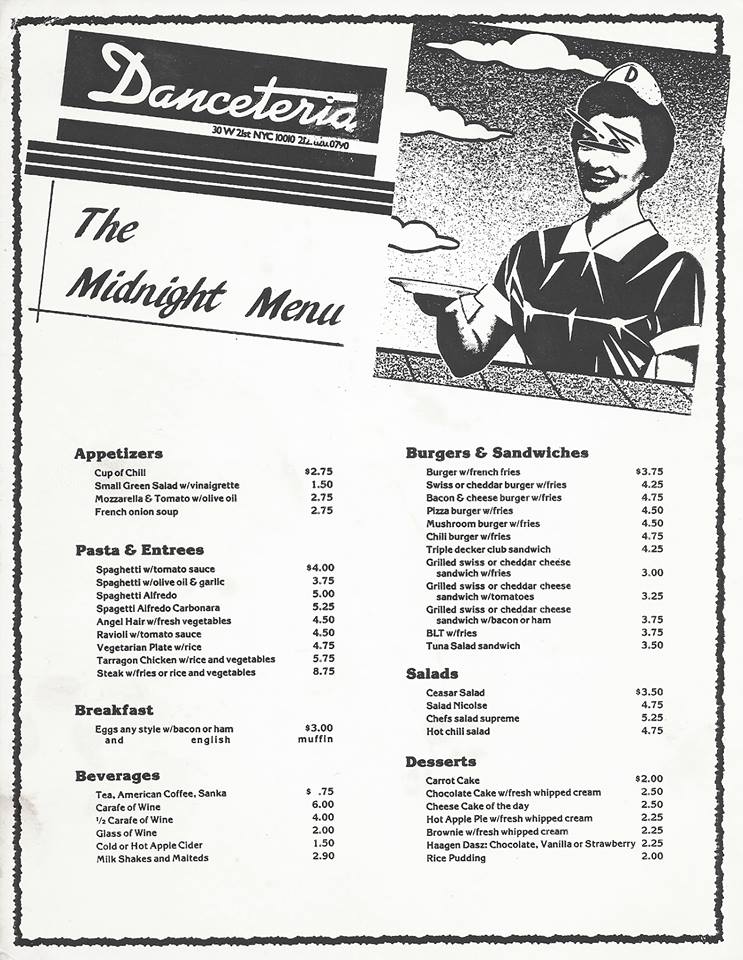
Jack, Marvin, and I watched the first Roberto Duran-Sugar Ray Leonard fight at Danceteria on West 19th Street. We had bet heavily on Duran. His unanimous victory paid 9-5. We were big winners. I shouted for drinks.
Out of the corner of my eye I spotted a face. It belonged to one of the Puerto Ricans from the stabbing. Jack slowly turned his head.
“Is that who I think it is?” Jack wasn’t expecting any lies.
“Yeah.”
“You don’t want a piece of this and you ain’t seen nothin’.” Jack snapped his fingers and his nephew trapped the Puerto Rican against the wall.
“Jack, we won money tonight.” I was pleading for a life.
“I win money all the time.” Jack’s hand slipped behind his jacket.
“Don’t do this.”
“Don’t do what? Ain’t nothin’ happen yet.” Jack walked across the room. His hand was holding steel.
People avoided contact.
The young Puerto Rican boy prayed with quivering lips.
Jack whispered in his ear, then patted him on the cheek. He returned to the bar with Marvin. The Puerto Rican boy was gone.
“What you say to him?”
“Said tonight was his lucky night, but I’d see him again.”
“And what will you do then?”
“Depends on my mood and tonight my mood is good.”
A week later Jack and I were eating at Lanza’s. We washed down meatball and spaghetti two bottles of horrid wine. As we waited for the check, I asked, “Jack, would you have killed that kid the night of Duran fight?”
“Kill ‘em?” Jack scrunched his lips as if the next words were hard to say. “Nah, no reason for killin’. He ain’t killed me.”
“But you looked like you wanted to kill him.”
“Lookin’ like and killin’ ain’t the same. You know why I threw you that gun?”
“Because you were hurt.”
“Yeah, but the real reason is that I was scared to kill them. If I did, then I was goin' back inside and I’m too old for prison. “ This was a confession. One Jack didn’t want to make. “It bothered me, forcin’ you to make that decision to shot or not. Everyone sees movies and thinks it’s easy pullin’ a trigger. Ain’t never easy pullin’ a trigger.”
“That’s true.” I had pulled the trigger without thinking.
"Good thing your shootin’ ain't worth shit.”
“I know that now.”
“They ain’t a toy.”
“My father said the same thing.”
“He was a smart man.”
After that night Jack and I parted ways as people do in the lives we led.
A year later I heard Marvin was shot dead in a Harlem alley, but no one had said anything about Jack.
I decided that he was still driving that big black Lincoln. It was better than thinking him dead, because men like Jack Flood don’t graduate to the heaven, even though they understand the real value of ‘thou shalt not kill’.
Jack had taught me that lesson and I’ve never owned a gun in my life. I shoot them only at gun ranges. I never think about killing anyone anymore, but I know what it’s like, because every bit of Jack was a little bit me.
At least I’d like to think he was.
He didn't want any more killing.
Not for him.
Not for me.
Not for anyone and that was a good thing.
I've looked up Jack Flood online.
His boxing record in on http://boxrec.com/list_bouts.php?human_id=32419&cat=boxer
His son wrote that his father's birth name was Norman Alonza Winston Flood.
Born Dec.26,1920 or 23 in Brandan,Vermont.

I don't see how you get Jack from Norman Alonza Winston, but he was always Jack to me.